Le texte du produit est affiché en anglais parce que le texte source n’est pas disponible dans cette langue.
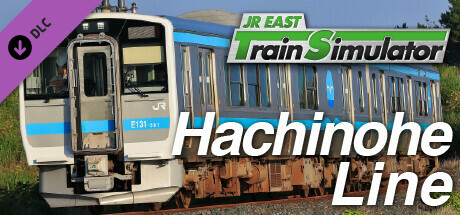
JR EAST Train Simulator: Hachinohe Line (Hachinohe to Kuji) Kiha E130-500 series

84 % d’avis positifs. Le prix actuel est proche de son prix enregistré le plus bas.
Pourquoi ce verdict
Mémoire des prix
Données des boutiques officielles pour cette région · FR
- Prix officiel actuel 21,59 €
- Prix normal 26,99 €
- Prix enregistré le plus bas 21,59 €
- Comparaison avec les promotions habituelles Non enregistré
- Intervalles de promotion observés Pas assez de débuts de promotion enregistrés pour établir un intervalle.
- Intervalles observés 0
- Période observée du 21 juil. 2026 au 21 juil. 2026 · 0 jours
- Fiabilité insuffisante
Offres
Prix des boutiques officielles et comparaisons de keyshops signalées
Signaler un problème
Historique des prix
Historique des prix acceptés et prix enregistrés les plus bas
À propos de ce jeu
Le jeu, présenté avec les mots de ses créateurs
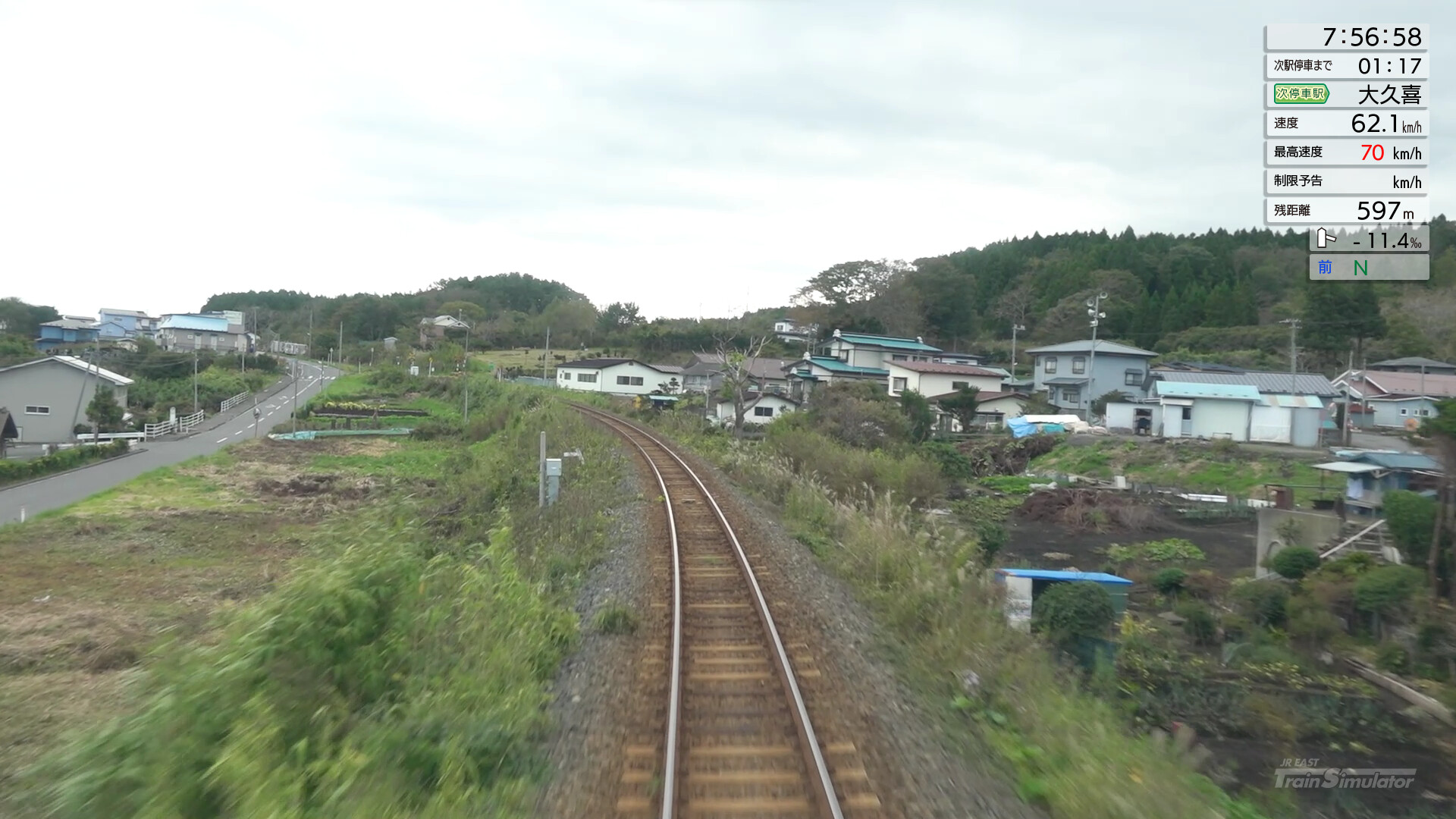
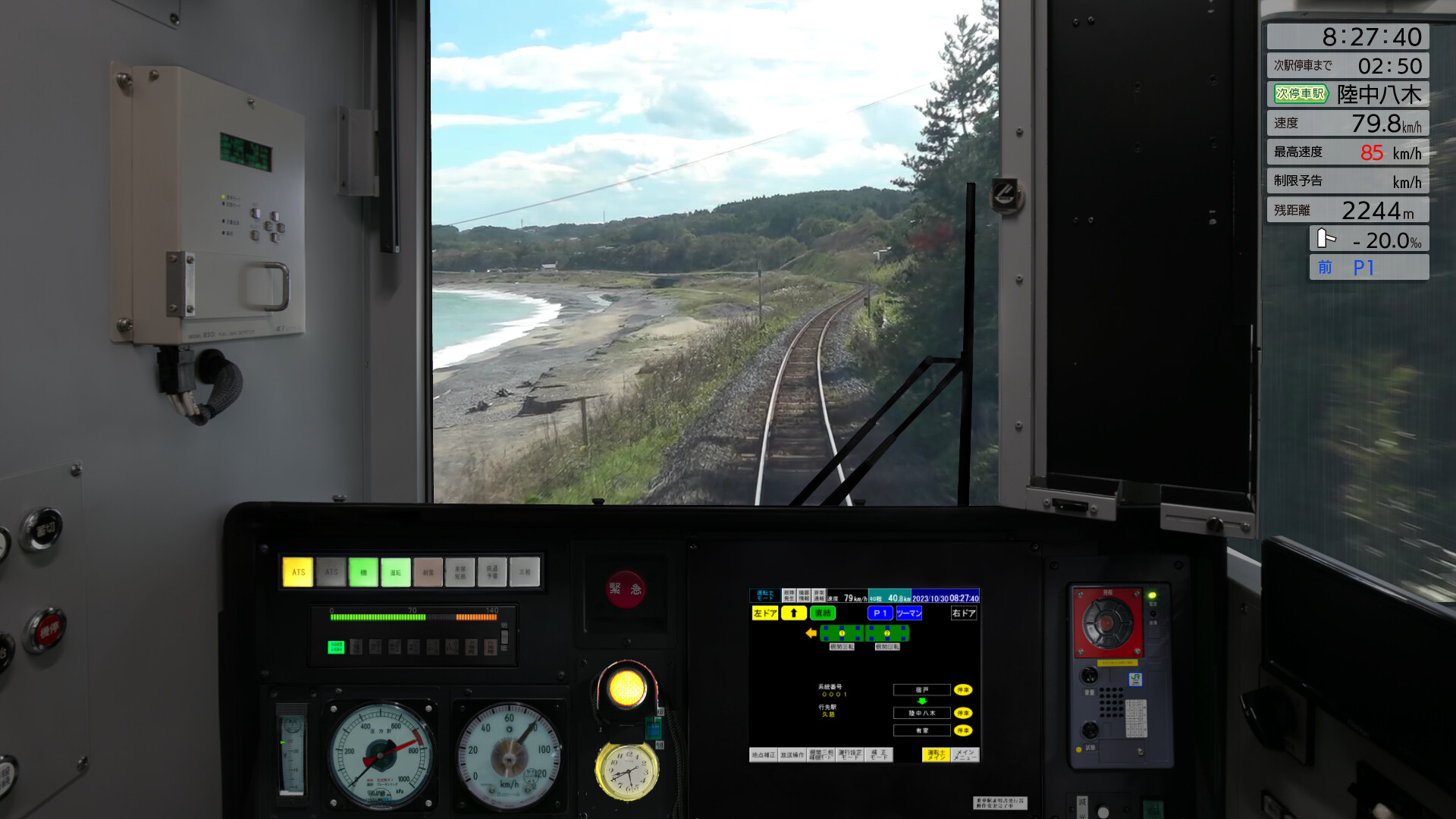
The Hachinohe Line connects Hachinohe Station in Hachinohe City, Aomori Prefecture with Kuji Station in Kuji City, Iwate Prefecture.Some sections of the line offer views of the ocean, making it a popular route for passengers to see the ocean from the train windows.
The line was first opened in 1894 between Shiriuchi Station (now Hachinohe Station) and Hachinohe Station (now Hon'hachinohe Station), and was repeatedly extended and opened to service until 1930, when the line was extended to Kuji Station, bringing the Hachinohe Line into full service.
With the opening of the Tohoku Shinkansen bullet train line extension between Hachinohe and Shin-Aomori stations in December 2010, the line between Hachinohe and Aomori stations, which had previously been on the Tohoku Main Line, was transferred to Aomori Railway, and is now a line with no connections to other JR conventional lines.
In October 2013, "TOHOKU EMOTION," a sightseeing train with a restaurant space throughout the train, began operation between Hachinohe and Kuji Stations, mainly on Saturdays and holidays.
The train line is divided into two separate lines: one between Hachinohe Station and Same Station for urban transportation, and the other between Hachinohe and Kuji Station for interregional transportation.
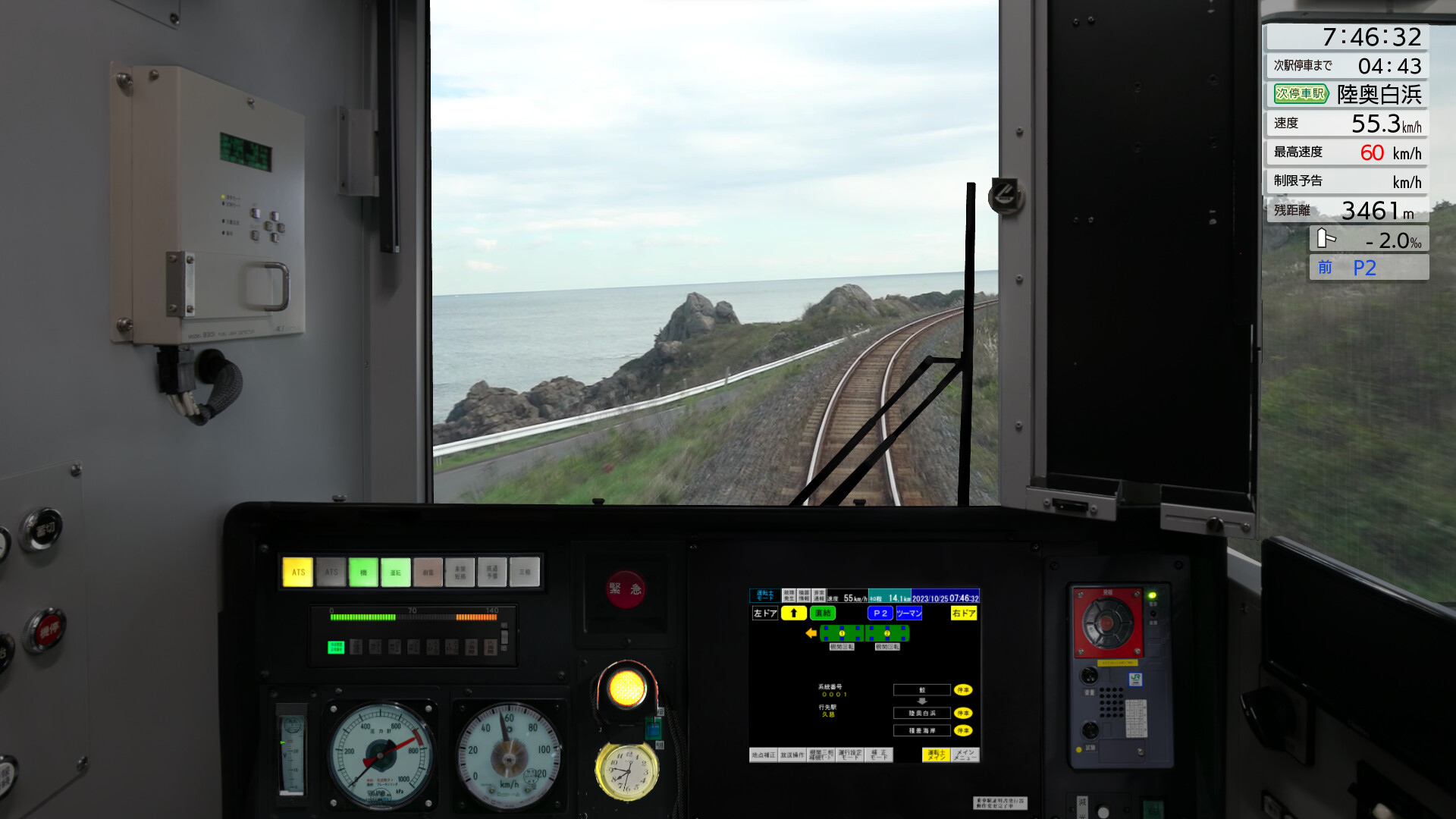
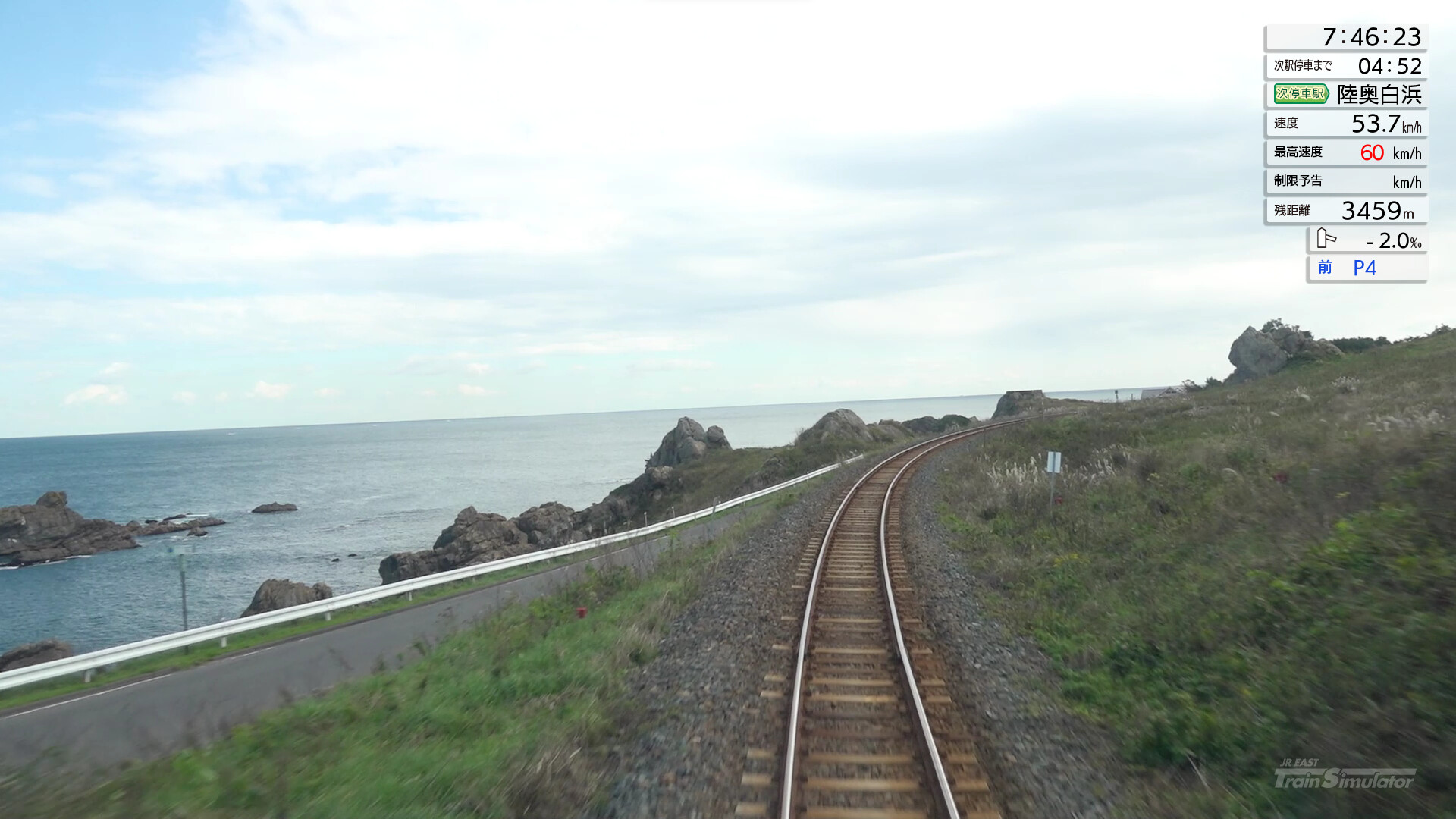
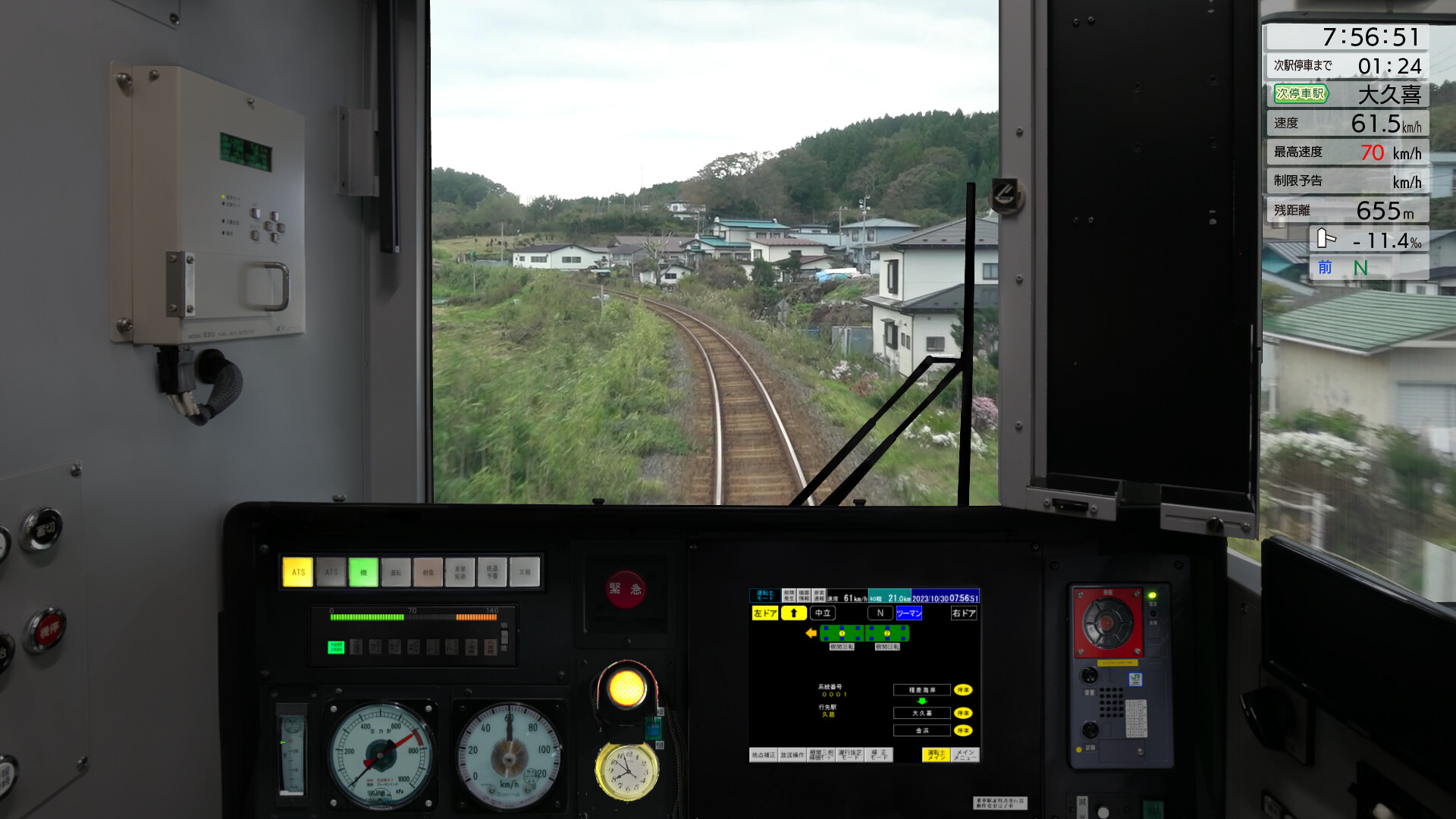
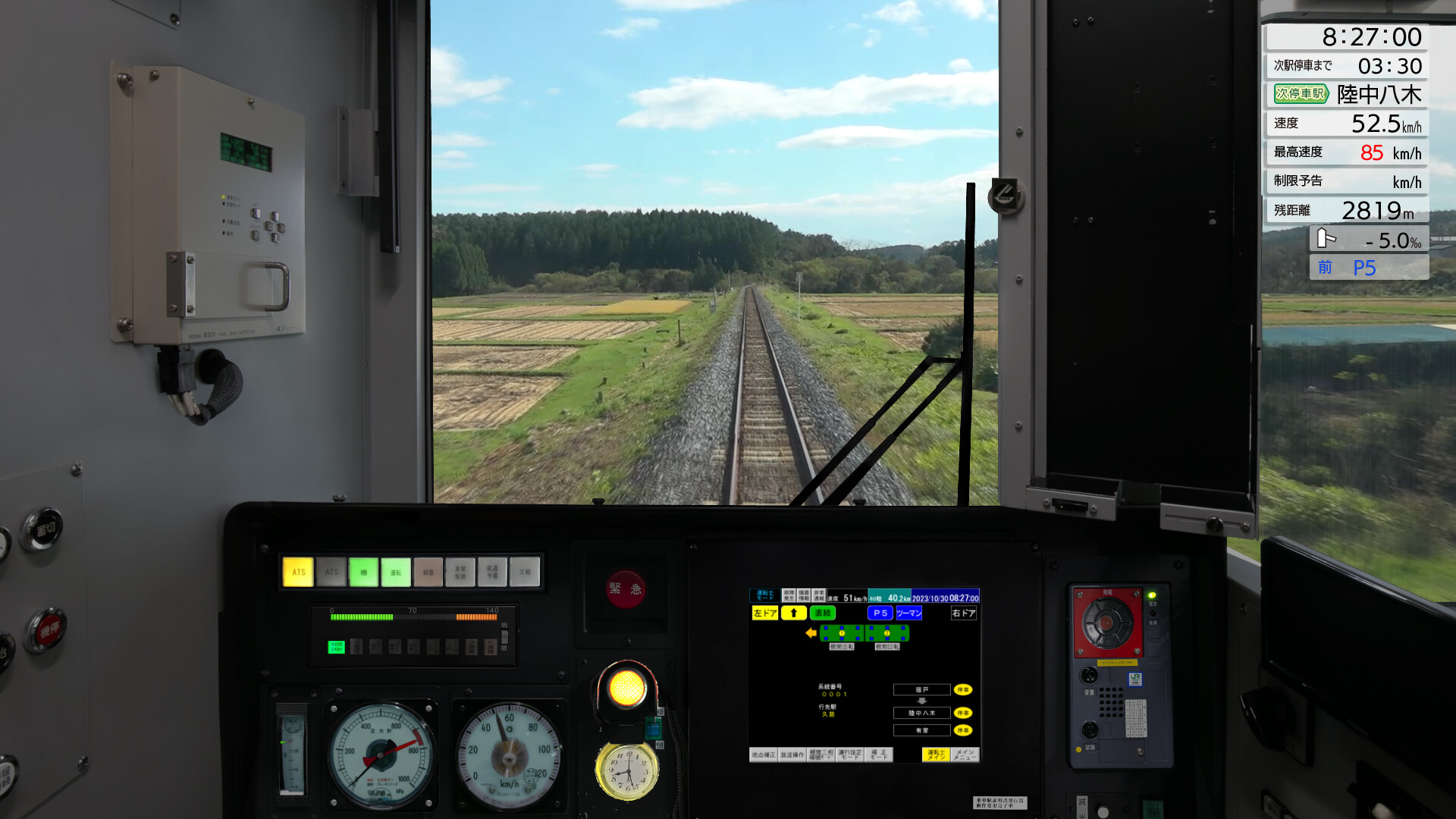
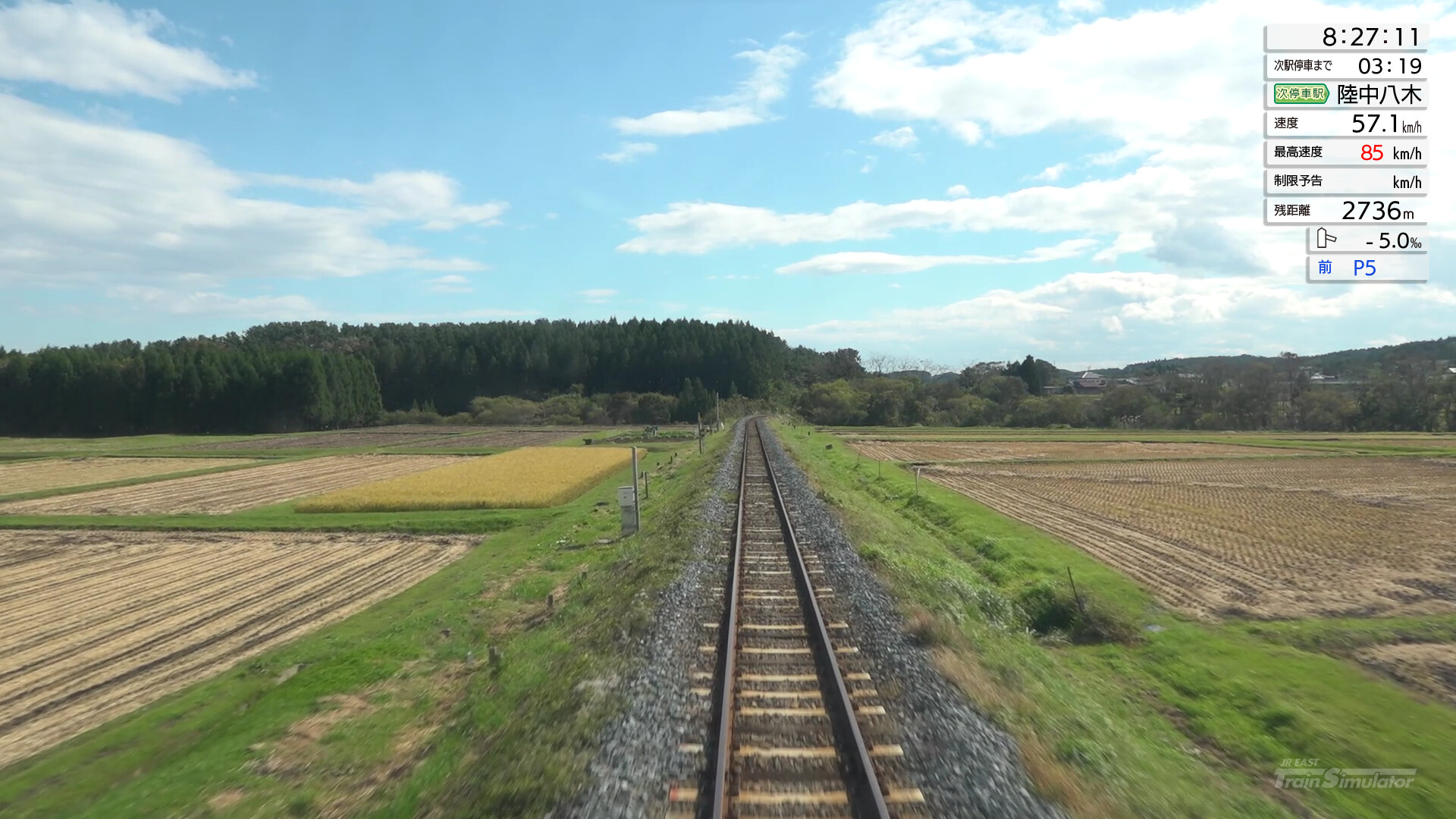
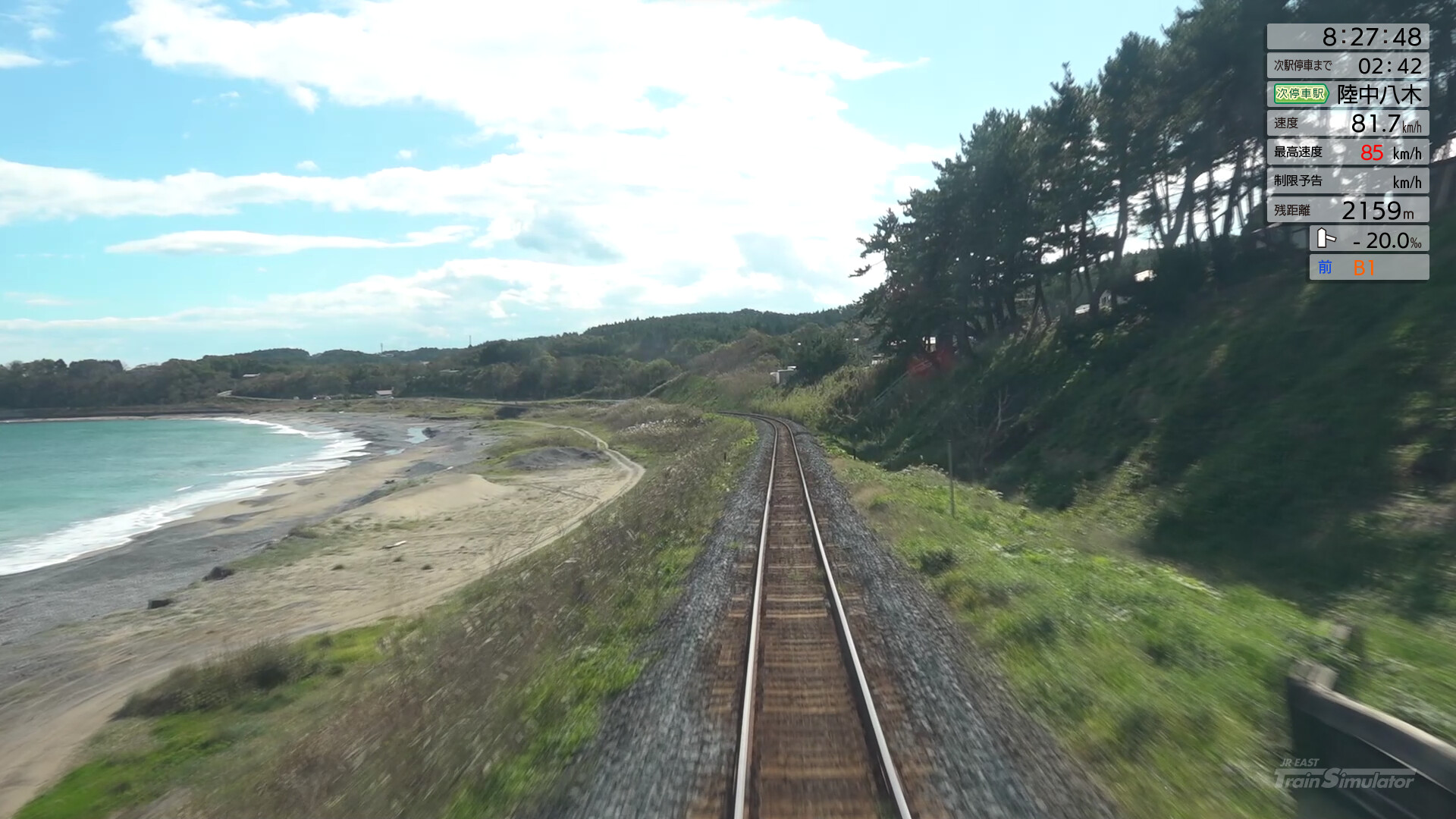
The majority of the route runs along the coastline, including the Tanezaki Coast, a national scenic beauty spot and a breeding ground for petrels. From Hachinohe Station to Same Station, the line runs through factories and urban areas; from Same Station to Rikuchu-Nakano Station, it runs through rural areas and along the Pacific Ocean; and from Rikuchu-Nakano Station to Kuji Station, it runs through hilly areas. Some sections of the line offer views of the ocean, making it a popular route for passengers to see the ocean from the train windows.
Supplementary information
- In Kiha E130-500 Series, the "Speed suppression (1)" and "Speed suppression (2)" functions can be used only when the main handle is not in the accelerator.
- Speed suppression (1): Deceleration brake (Low) - "D" key
- Speed suppression (2): Deceleration brake (high) - "W" key
Highlights
- City section/Hachinohe Station - Same Station
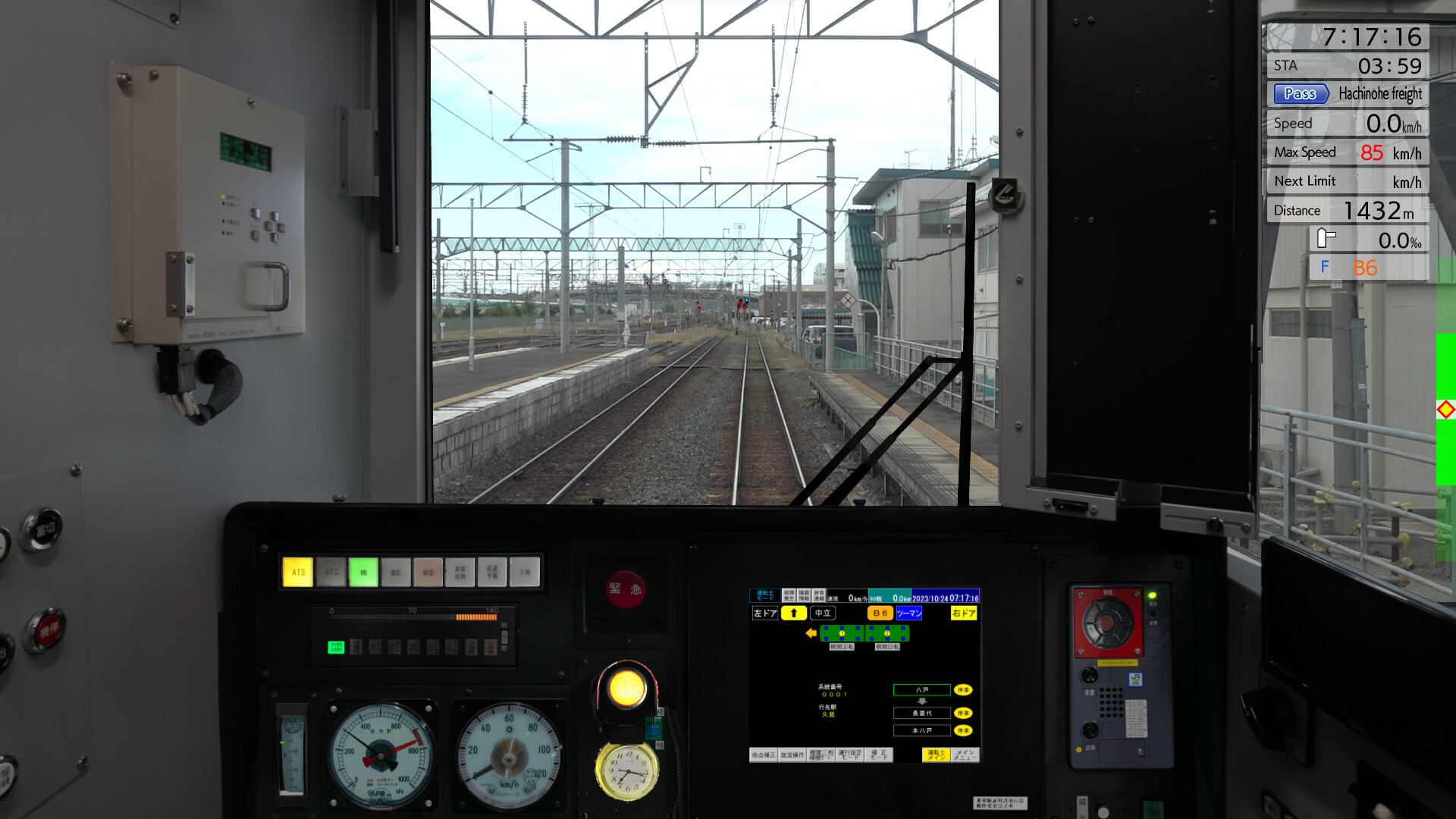
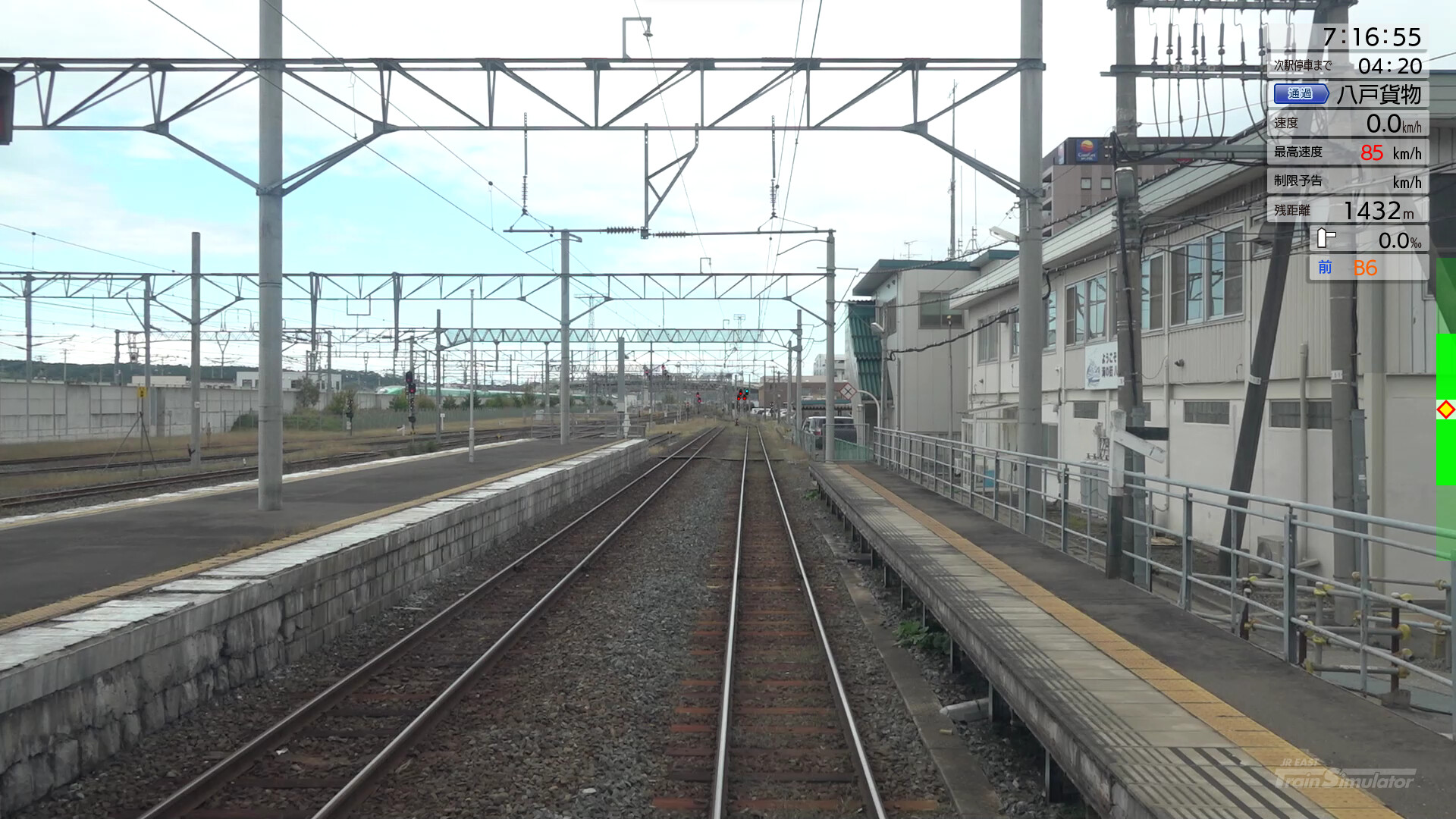
- Parallel section with Hachinohe Waterfront Railway Line/Hachinohe Freight Station - Hachinohe Station
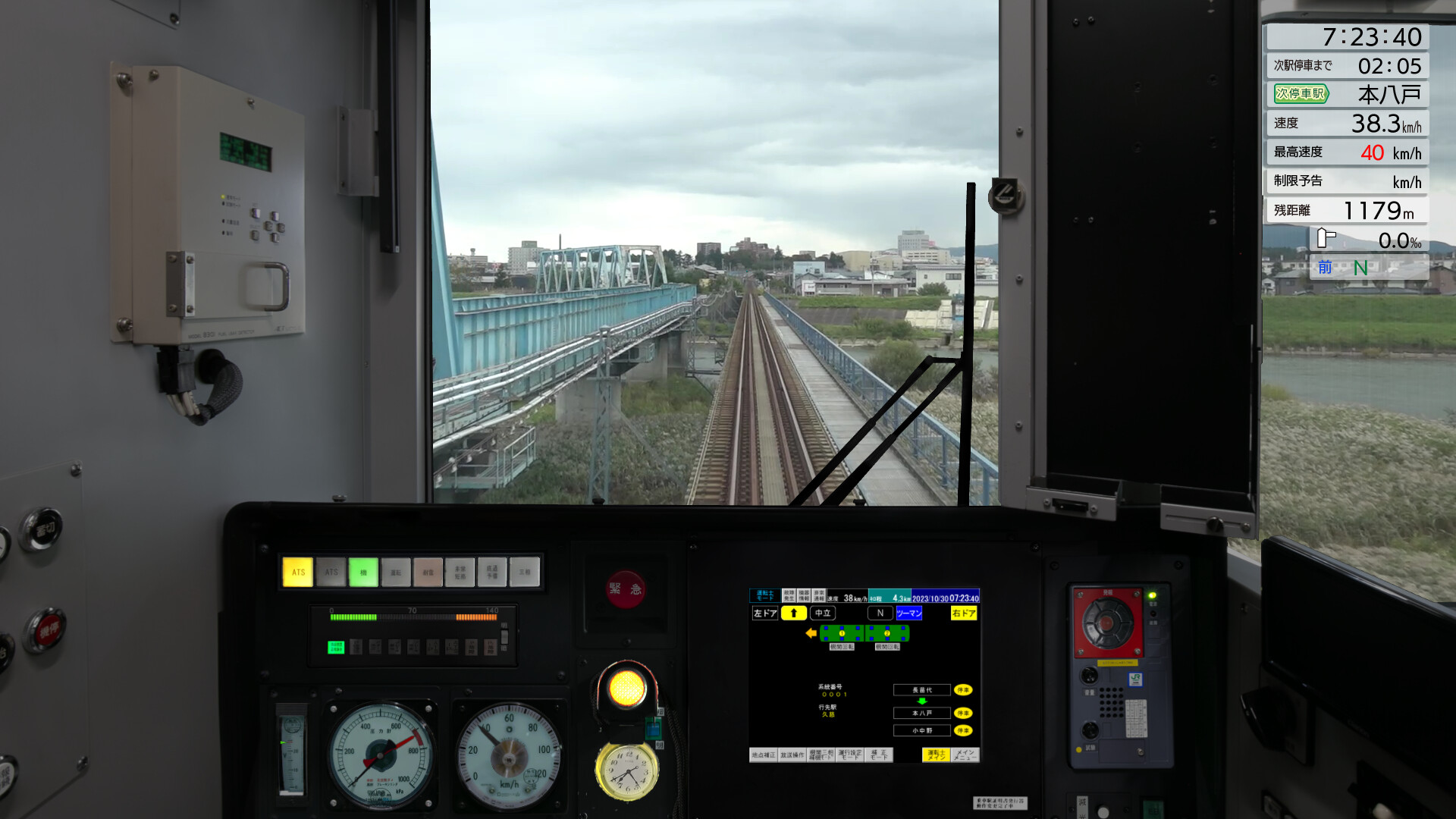
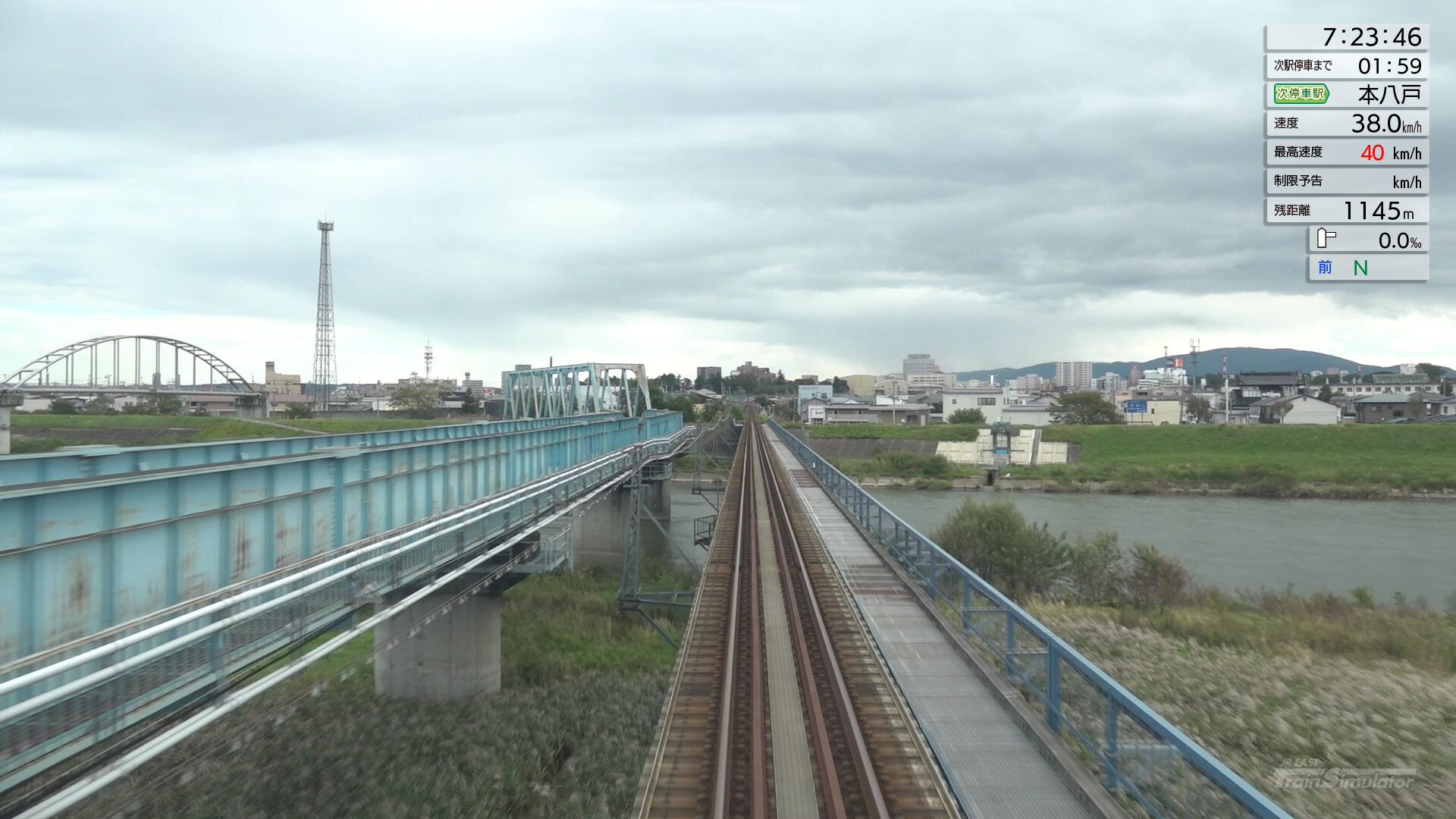
- Mabechi River/Hachinohe Freight Station - Hachinohe Station
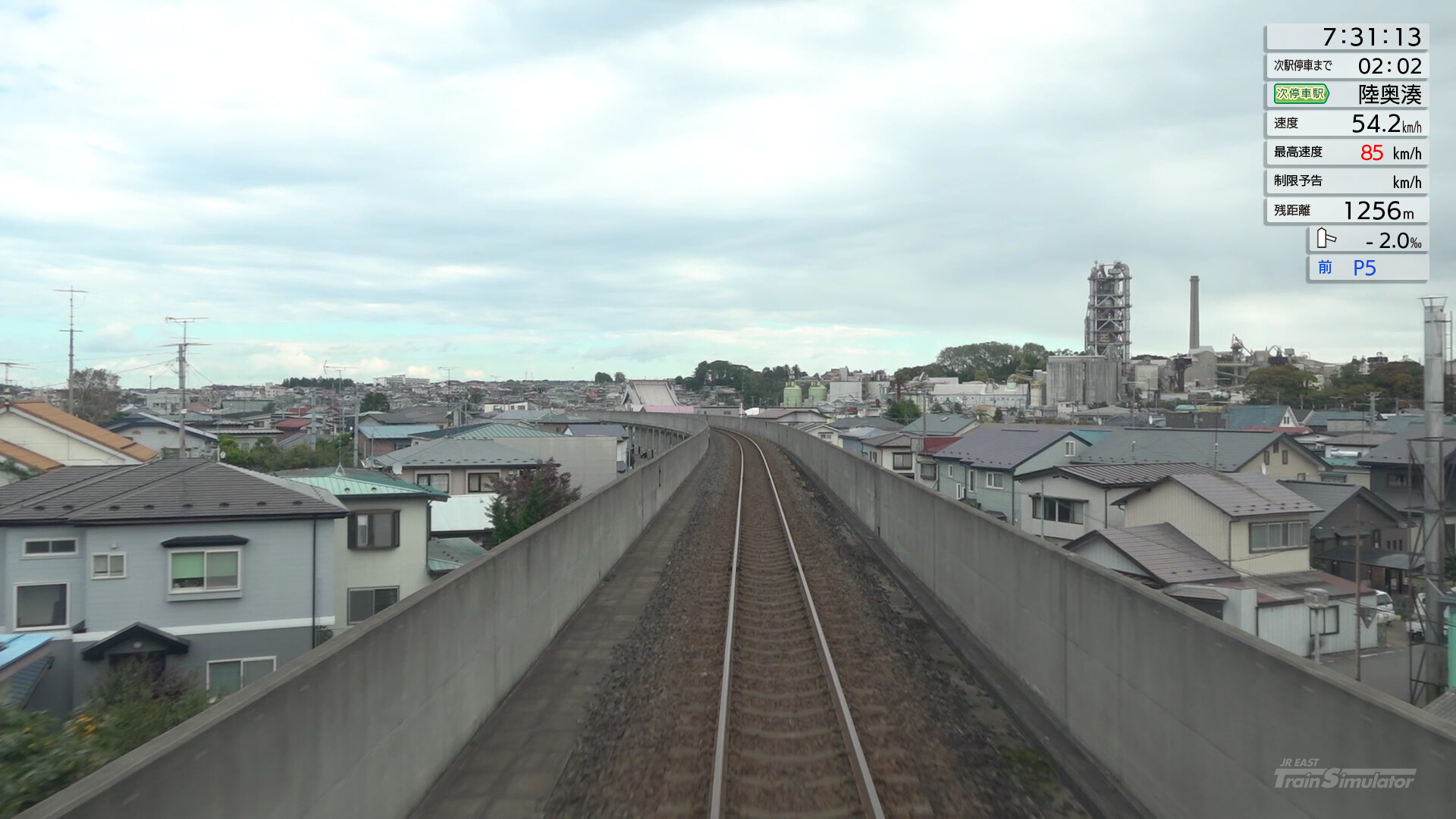
Crossing the Mabechi River railway bridge. The track branching off to the left before the Mabechi River railway bridge used to be utilized as a freight line. - Branch on elevated line/Hon-Hachinohe Station - Konakano Station
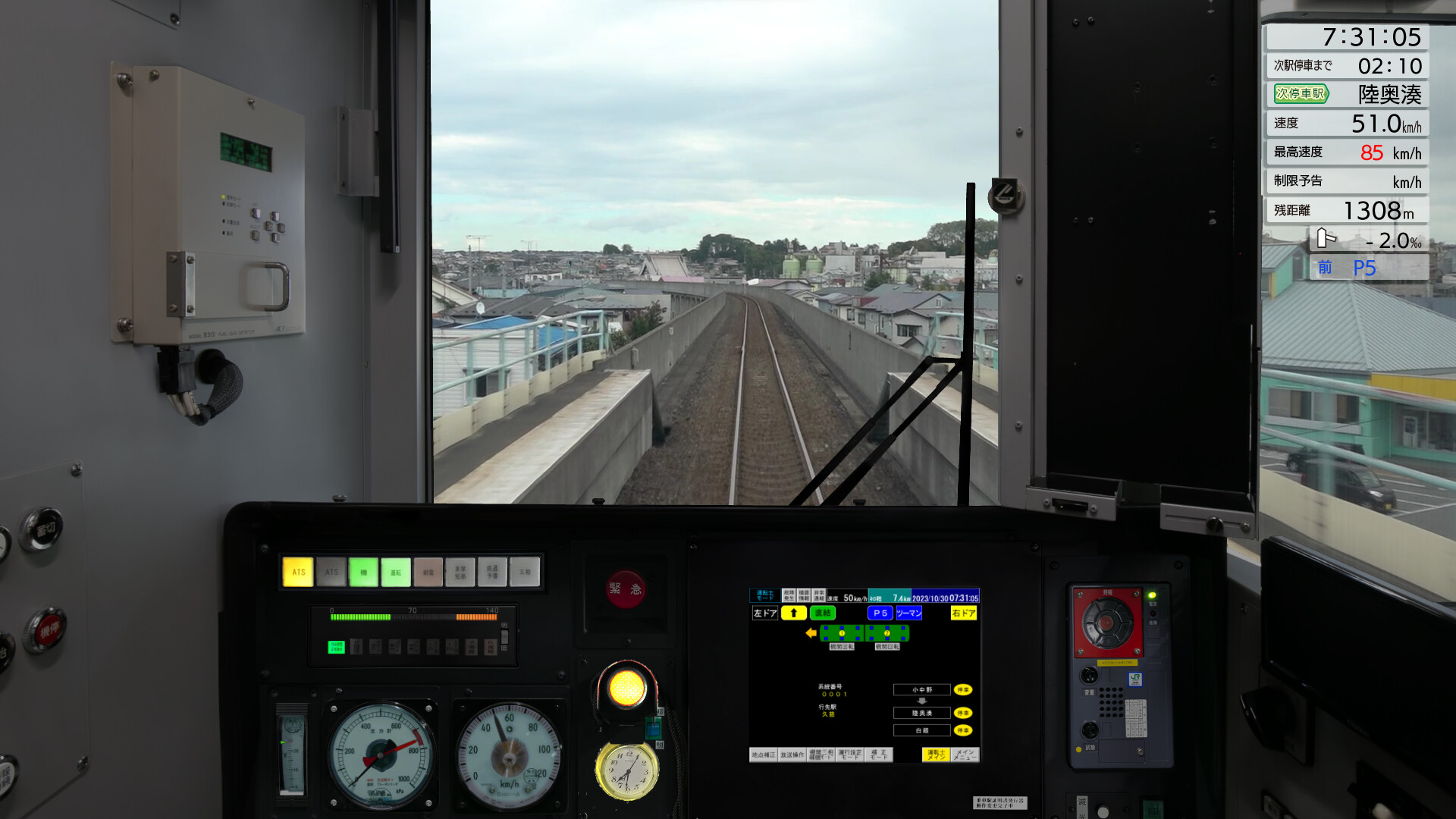
The Hachinohe line splits into two directions on the elevated railway line, and the Hachinohe line turns to the right. The straight track used to be a freight branch line of the Hachinohe Line that ran to Minato Station. - Niida River/Konakano Station - Mutsu-Minato Station
Cross the railroad bridge over the Niida River. - Playpia Shirahama Station/Same Station - Mutsu-Shirahama Station
A temporary station that operated until 1995; it was discontinued in 2012 and the station platform has now been removed. - Seaside section/Same Station - Mutsu-Shirahama Station
The Pacific Ocean can be seen on the left. The train climbs up the gradient at once. - The station where you can cross paths with oncoming trains/Hashikami Station
This station has a pair of platforms that allow trains to pass each other on the opposite side of the station. In front of the station, a sleeper signal used at this station is preserved. - Running along the coast/Shukunohe Station - Rikuchu-Yagi Station
The station has a relative platform and can exchange trains with oncoming trains, and was the last JR station to use semaphore signals until they were removed in 2005. - Seaside Section/Rikuchu-Yagi Station - Uge Station
Uge Beach is located just outside of Uge Station. - Mountainous section/Rikuchu-Nakano Station - Rikuchu-Natsui Station
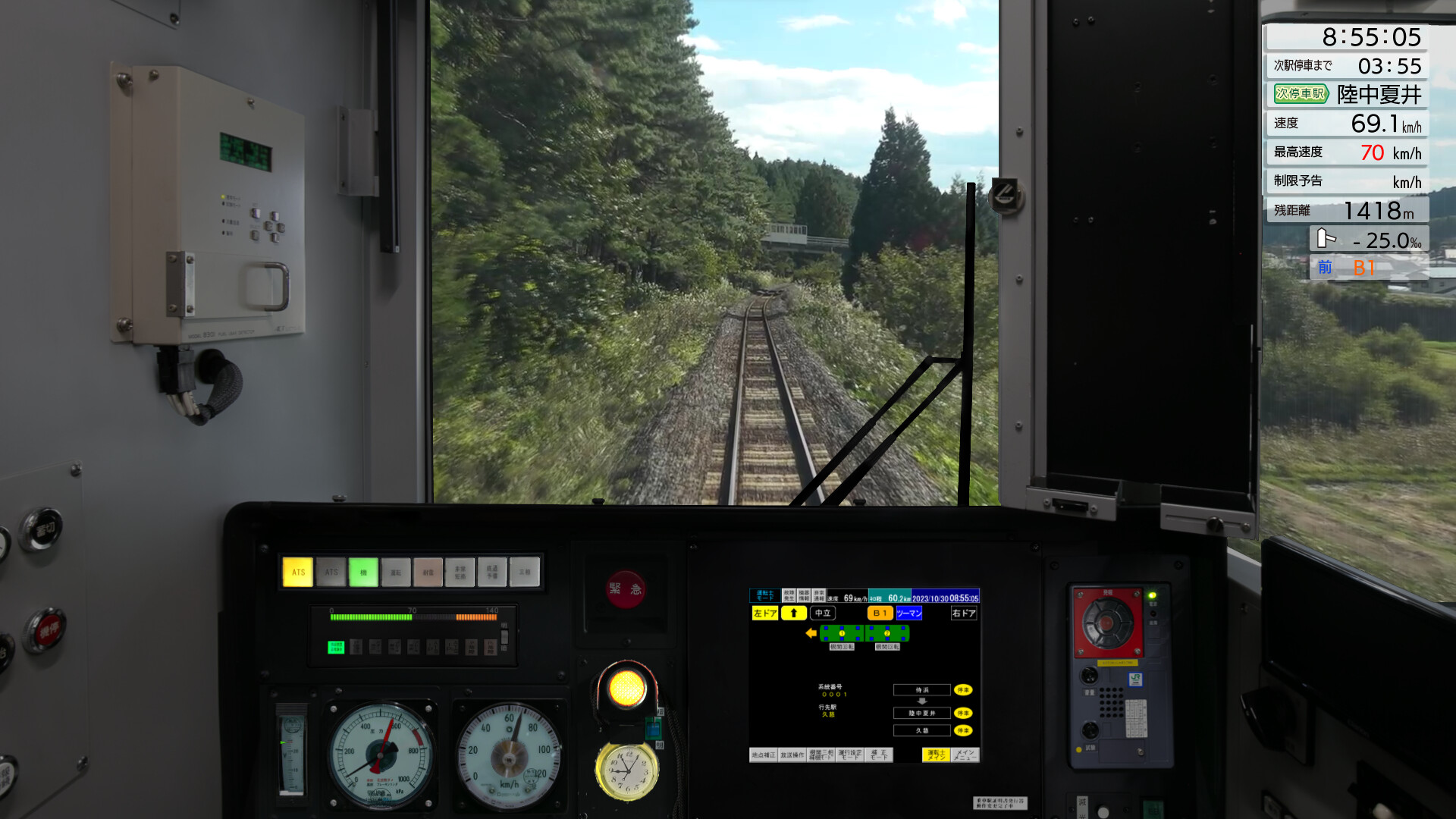
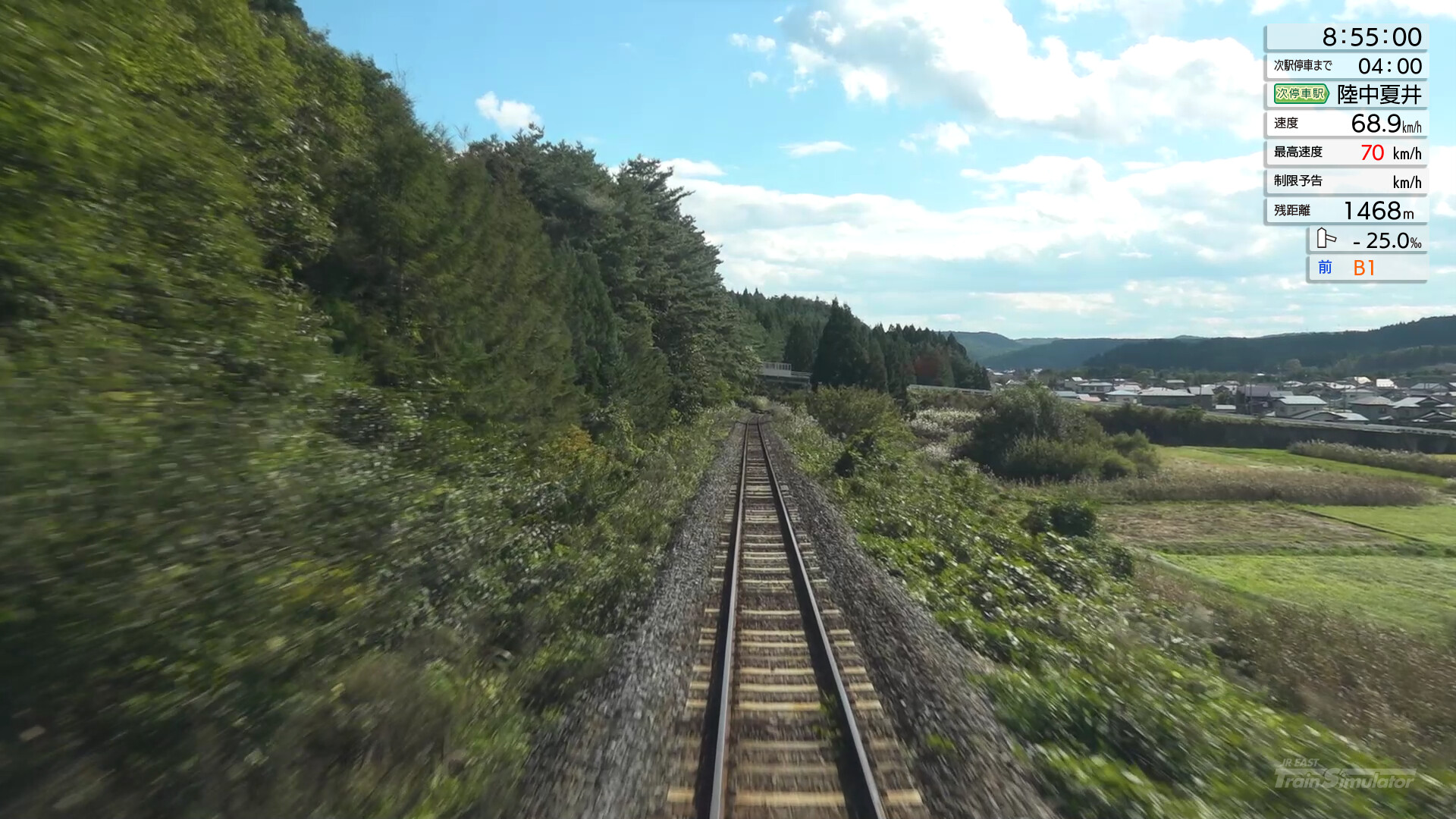
The train runs through the mountains. - Running down the mountain/Samuraihama Station - Rikuchu-Natsui Station
The train runs down the mountain and enters the urban section. - Kuji River/Rikuchu-Natsui Station - Kuji Station
Just before arriving at Kuji Station, the train will cross a railroad bridge over the Kuji River.
Route Information
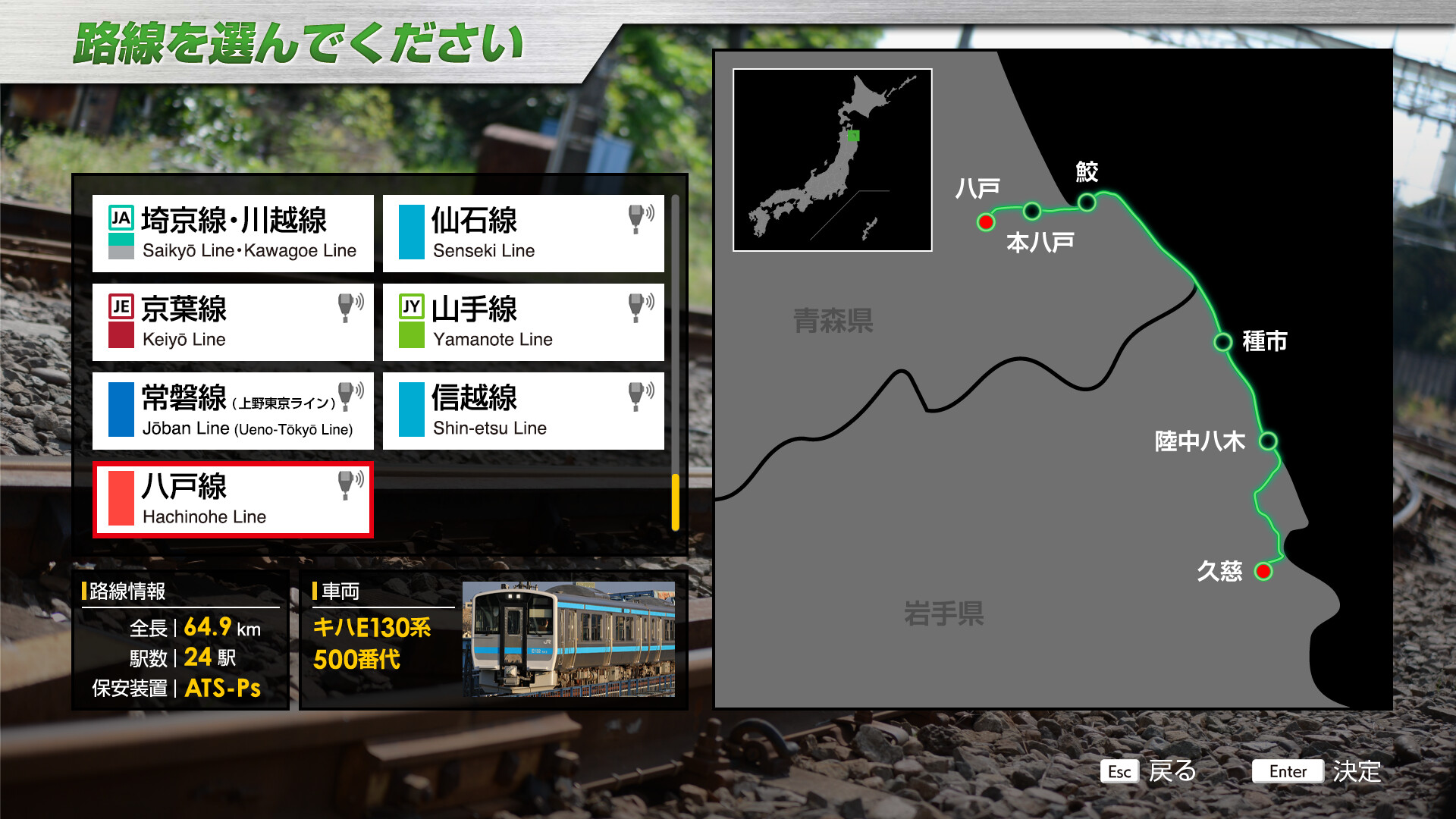
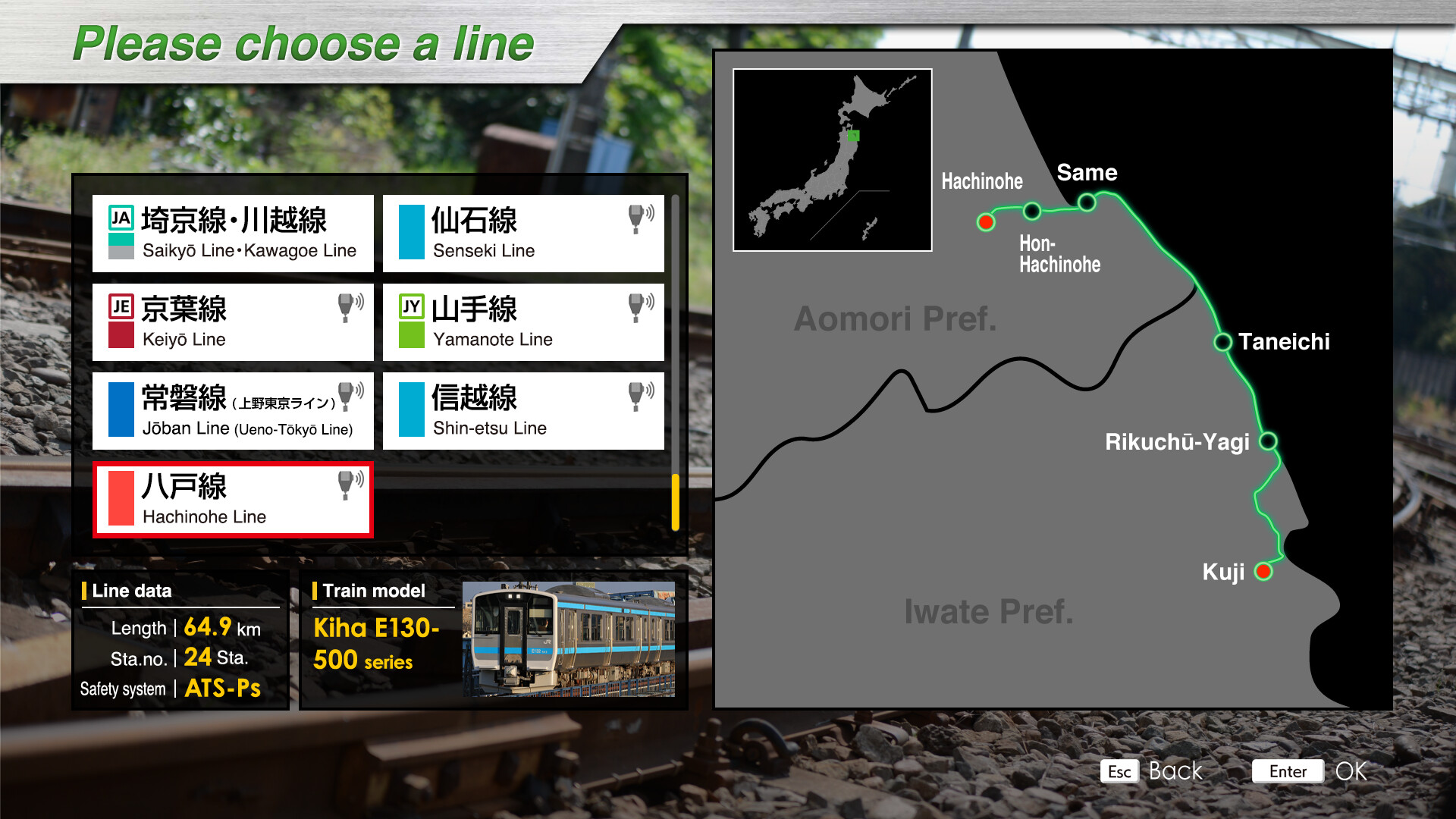
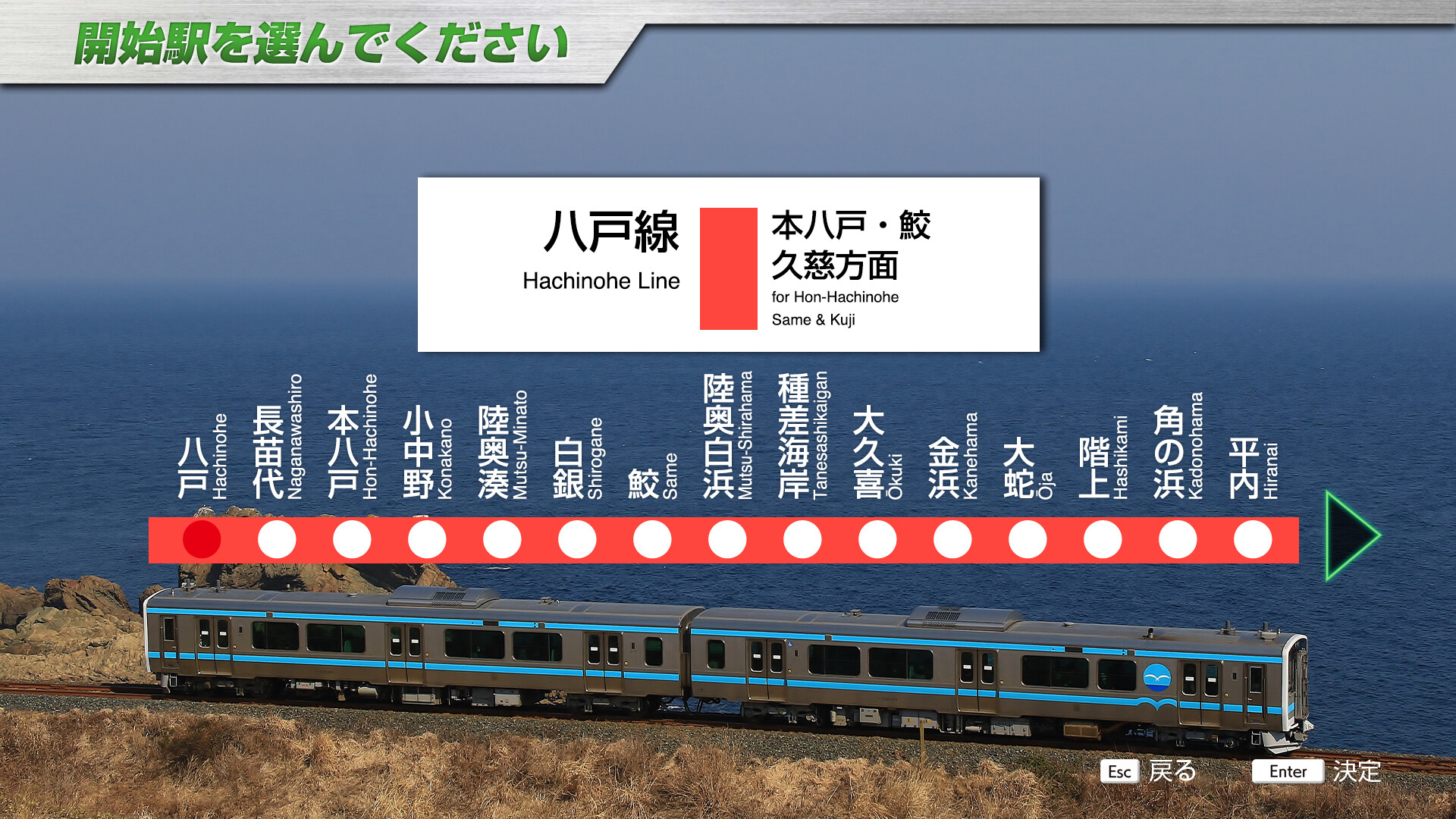
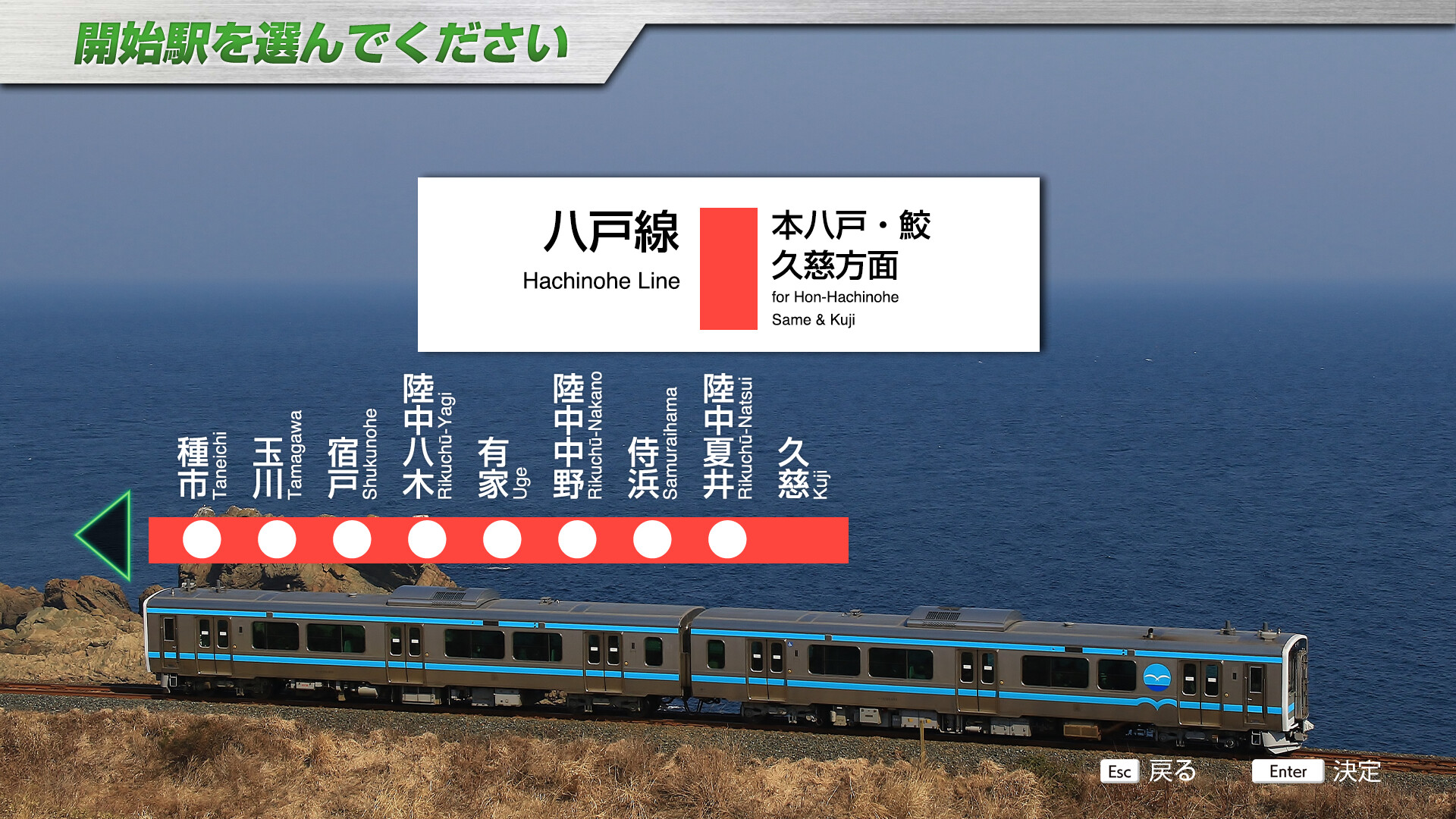
- Section: Hachinohe Line Outbound Hachinohe ⇒ Kuji
- Total length: 64.9 km
- Number of Stations: 24
- Security equipment: ATS-Ps
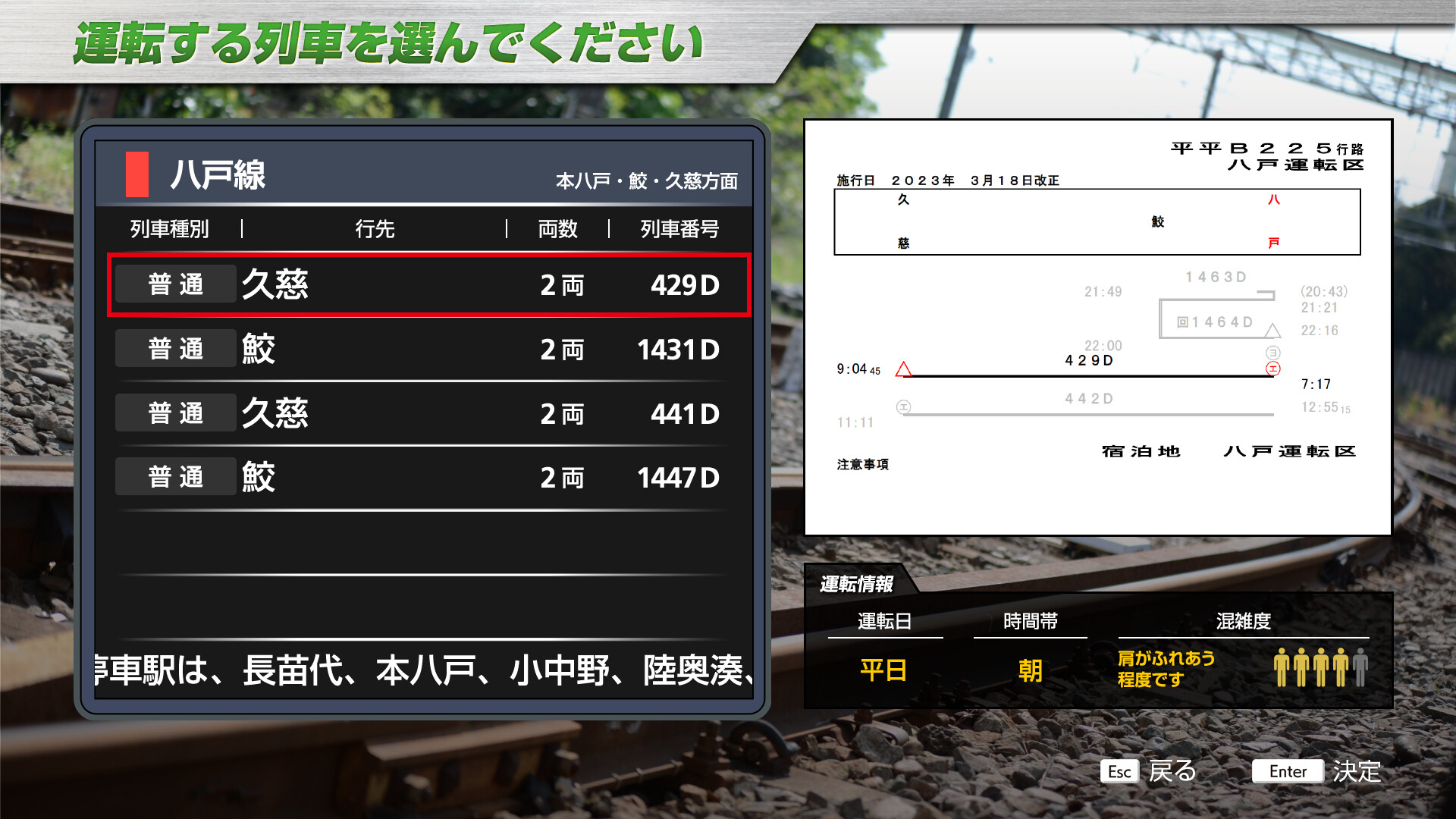
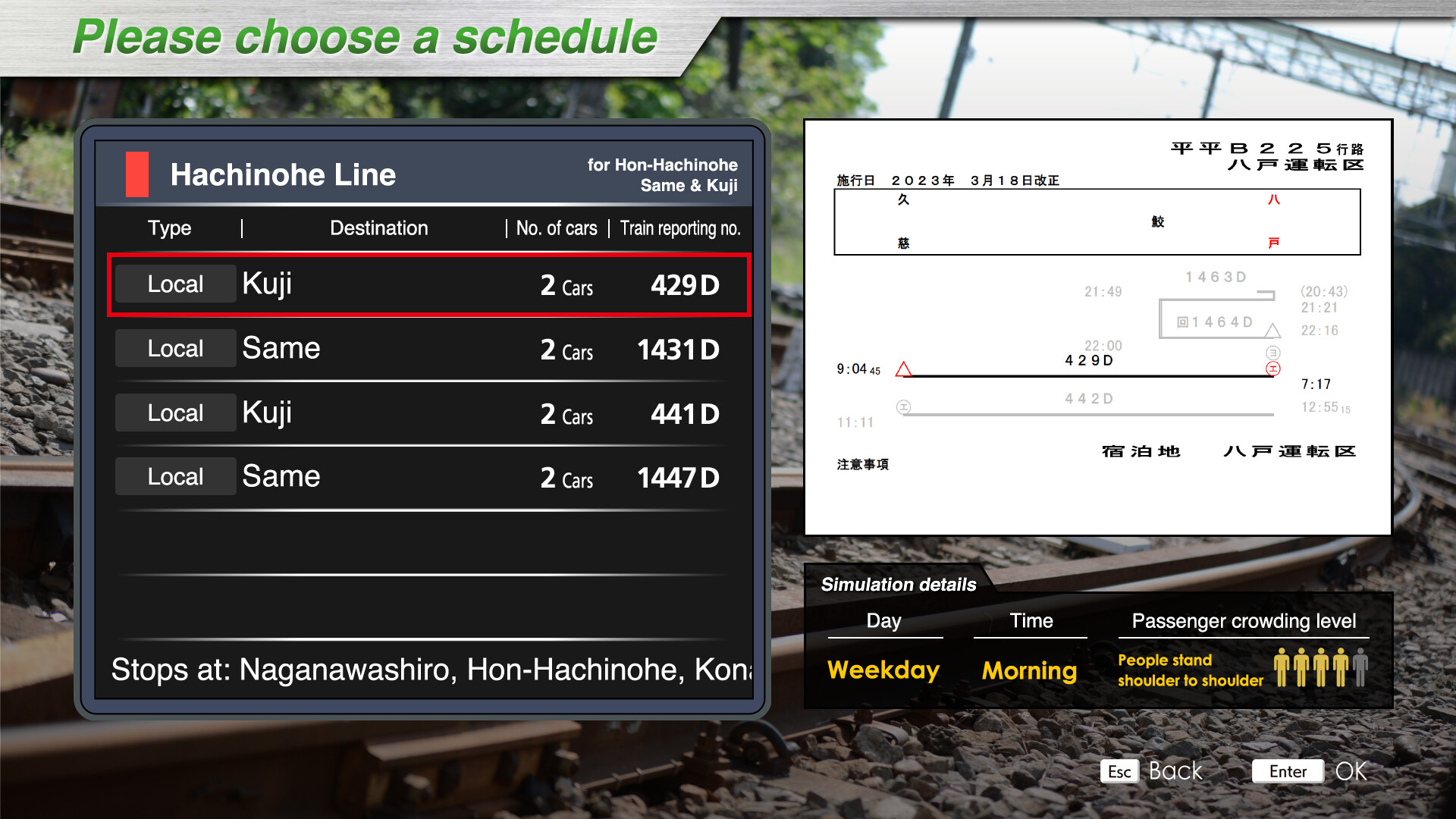
Train schedules that can be operated
- Train Number:429D
- Type/Destination: Local train to Kuji
- Section where you can drive: Hachinohe to Kuji
- Type of train: Series Kiha E130-500, 2 cars
- Responsible for real voice train announcements: Hachinohe train crew depot
- Train Number:1431D
- Type/Destination: Local train to Same
- Section where you can drive: Hachinohe to Same
- Type of train: Series Kiha E130-500, 2 cars
- Responsible for real voice train announcements: Hachinohe train crew depot
- Train Number:441D
- Type/Destination: Local train to Kuji
- Section where you can drive: Hachinohe to Kuji
- Type of train: Series Kiha E130-500, 2 cars
- Responsible for real voice train announcements: Hachinohe train crew depot
- Train Number:1447D
- Type/Destination: Local train to Same
- Section where you can drive: Hachinohe to Same
- Type of train: Series Kiha E130-500, 2 cars
- Responsible for real voice train announcements: Hachinohe train crew depot
Médias
Bandes-annonces et captures de la page de la boutique
Jeux comme JR EAST Train Simulator: Hachinohe Line (Hachinohe to Kuji) Kiha E130-500 series
Tags en commun, pas la même série.






JR EAST Train Simulator: Hachinohe Line (Hachinohe to Kuji) Kiha E130-500 series : historique des prix et offres actuelles
JR EAST Train Simulator: Hachinohe Line (Hachinohe to Kuji) Kiha E130-500 series sur PC se vend actuellement à partir de 21,59 € dans des boutiques autorisées. Prix le plus bas depuis le 21 juil. 2026: 21,59 €. Soit 20% de moins que le prix courant de 26,99 €.
Avis, durée de jeu et classification de JR EAST Train Simulator: Hachinohe Line (Hachinohe to Kuji) Kiha E130-500 series
19 personnes ont évalué JR EAST Train Simulator: Hachinohe Line (Hachinohe to Kuji) Kiha E130-500 series. 84% sont positives. Steam appelle ça Positive. Brazil le classe l.
Questions fréquentes
Réponses tirées des données de ce jeu. Là où je n'ai rien, je ne dis rien.
Le prix actuel de JR EAST Train Simulator: Hachinohe Line (Hachinohe to Kuji) Kiha E130-500 series est-il intéressant ?
Quelles boutiques proposent JR EAST Train Simulator: Hachinohe Line (Hachinohe to Kuji) Kiha E130-500 series ?
JR EAST Train Simulator: Hachinohe Line (Hachinohe to Kuji) Kiha E130-500 series pas cher : où trouver le meilleur prix ?
JR EAST Train Simulator: Hachinohe Line (Hachinohe to Kuji) Kiha E130-500 series vaut-il le coup ?
Quelle est la classification par âge de JR EAST Train Simulator: Hachinohe Line (Hachinohe to Kuji) Kiha E130-500 series ?